

Reviewed · TICKETS
Entrance Ticket to World of Seashells museum
World of Seashells is interesting because it turns a simple beach find into a real science and culture stop, all in one room. I especially liked the beauty of the displays and how the museum connects shells to both biology and human stories. One thing to keep in mind: if you have a short attention span, the museum can feel information-heavy, and there are also occasional reports of early closures, so plan to arrive earlier rather than late in the day.
The ticket is inexpensive for Mauritius, and the visit works well as a break between beach time and other south-coast plans. Expect an easy, mostly walk-in style experience with a mobile ticket, plus a lot to look at for kids and adults alike. If you want a quick photo stop only, you may finish faster than the upper end of the time range.
Key things to know before you go
- 8,000 shells from around the world, shown in an easy-to-browse setup
- Shell science meets storytelling, including defense ideas, living structure, and human uses
- Math in plain view, with explanations tied to spiral curves and the shell theorem
- Good for kids, since the museum leans visual, colorful, and curious
- Mobile ticket entry, which makes arrival simple
- Plan earlier timing, since there have been reports of access ending around 3pm
World of Seashells in Chamarel: what you’ll see
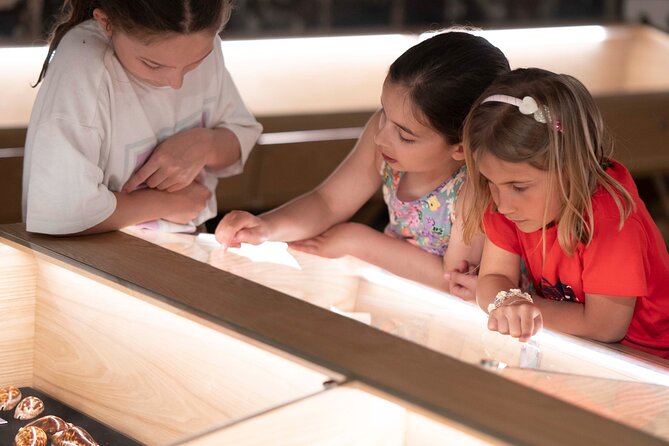
This is a small-museum kind of attraction, but the size of the collection is the headline. You’re walking through a display of 8,000 seashells collected from across the world, presented so you can move from one type to the next without feeling lost. The goal is not just decoration. It’s observation, plus a guided way to understand what you’re looking at.
What I like about the layout is that shells can look similar until you start paying attention. Here, you’re encouraged to notice differences in shape, pattern, and structure. The museum highlights how shells relate to an animal’s needs, including how they function in life and how they help with defense. That makes the whole thing feel less like browsing and more like learning, without turning into a lecture.
There’s also a cultural layer. The displays connect shells to how people used them over centuries, and they include myths and legends that link shells to ideas about the origin of life. If you’ve ever seen shells in crafts or jewelry, this gives you more of the backstory and makes the objects feel meaningful instead of random.
A few more Chamarel trips to hold up against this one
- North Day Tour, Botanical Garden, Sugar Museum, Rum Tasting
★ 5.0 · 3 reviews
Tickets, timing, and the mobile entry flow

The entrance ticket is $7.00 per person, and it’s the kind of price that makes you think, why not? For a museum visit that can easily take you an hour, it’s low-risk. You’re not committing to an all-day tour, but you are buying time in a focused environment where kids can wander and adults can read at their own pace.
You can book ahead, and on average it’s booked about 5 days in advance. That matters because it reduces the stress of trying to fit it in at the last minute while you’re already on Mauritius time. After booking, you get confirmation at the time of purchase, and the ticket you use is a mobile ticket, so you don’t need to print anything.
Timing is also practical. The stated start time is 9:00 am, and the visit is listed as about 45 minutes to 1 hour 30 minutes. In real life, your pace will decide where you land. If you like to skim and just enjoy the look, you may end up around the shorter end. If you actually read the explanations and take time with the patterns and spirals, you can fill closer to the longer end.
One more timing tip: since there have been reports of access closing early (one mention places the last entry around 3pm), don’t treat it as a late-afternoon stop. Go earlier if you can, especially if you’re traveling with kids.
Entering the museum: your “walk-through” experience
When you arrive, you’re essentially entering a themed walkthrough. The shells are the stars, but the museum guides you to look in specific ways. Instead of only pointing out what’s pretty, the information frames the shells as tools, homes, and even symbols.
You’ll start by getting oriented on the sheer variety. From there, the museum leans into structure and function. You’ll see explanations that cover:
- Shell morphology, meaning how shells are shaped and built
- Living mechanism, so you understand that shells are not dead objects in nature
- Defense system, which is a big part of why shells come in so many forms
- Patterns and colors, which the museum treats as purposeful and worth noticing
That’s the core arc. You look, you learn what the structure might be doing, then you move on to the next set of shells with a better eye.
Shell science that feels understandable, not textbooky
A standout part of the experience is how it connects biology to what your eyes can see. The museum talks about the shells’ living role and defense, so you’re not just admiring curves. You’re thinking about why those curves exist.
The displays also discuss myths and legends from around the world, linked by one theme: how the shell is tied to ideas about the origin of life. Whether or not you lean spiritual, it’s a smart way to broaden your perspective. It turns the museum into a cultural lesson as well as a nature lesson.
And then there’s the part I always find fun in science museums, the mix of “how it works” with “why it looks that way.” Here, you’ll come across explanations tied to the shell theorem and the math behind those perfect spiral curves. If you ever wondered why shells seem to follow graceful rules, this is where you get a guided answer that doesn’t require you to already know the topic.
This is also where kids often surprise you. Even if they don’t follow every sentence, they’ll notice patterns, shapes, and repetition. The museum is visual, so interest usually sticks.
Same coast, a very different half-day:
- Île aux Bénitiers: Snorkeling w/Dolphins Boat Tour & Lunch
★ 4.0 · 1,635 reviews - Mauritius: Private South Tour with Pickup
★ 4.9 · 940 reviews - Full-Day Catamaran Cruise to Île aux Cerfs with BBQ Lunch
★ 4.5 · 455 reviews - Mauritius: Private Southwest Day Tour
★ 4.8 · 312 reviews
Human stories: how people used shells over centuries
Another layer that makes this stop more than a quick viewing is that shells are presented as part of human life. The museum includes information on how people used shells throughout history, across different parts of the world.
This matters because it changes how you see the collection. You’re not only looking at nature, you’re also seeing how humans collected and valued shells for practical and symbolic reasons. That makes the museum feel broader than just “cool shells.” It becomes a snapshot of how humans interact with the natural world.
If you like travel stops that connect nature to daily life, this is one of those moments. It’s the kind of place where shell jewelry, souvenirs, and shell crafts suddenly feel less random.
Why it hits kids so well
Kids tend to like two things: visual variety and a sense that they’re discovering something. The museum delivers both. With thousands of shells in one place, there’s always a new example to spot, and kids can play the game of finding differences in color, shape, and texture.
The museum also frames the experience around curiosity. Even if you’re not reading every line, the displays nudge attention toward features like spiral patterns and protective design. That kind of guidance helps parents who don’t want to do a full-on science lesson while everyone is melting in the heat.
One caution: if your child is very restless or you have a small attention window as a family, go when you’re ready to keep it light. This isn’t a ride with screens and sound effects. It’s learning through observation. You can still keep it fun, just treat it as a “look and spot” visit.
How long to plan, and how to pace it without rushing
The official range is 45 minutes to 1 hour 30 minutes, but you can tailor it to your style. The museum’s content is dense enough that you can easily spend more time than you expect if you’re the type who reads labels carefully.
Here’s a pacing approach that works well:
- Give yourself at least 45 minutes so you don’t feel like you’re sprinting
- If you’re reading actively, aim for closer to 60 to 90 minutes
- If you’re mostly in picture-taking and quick scanning mode, you may finish sooner, but don’t skip the spiral and defense sections, because those add the most “wow, that’s why” feeling
Also, remember this is a museum setting, not a beach. It’s easiest when you pair it with other south-coast plans earlier in the day, so you can come back to open-air time after.
Value check: is $7 worth it?
At $7 per person, this is one of the most budget-friendly ways to spend time in the south. The value isn’t just the low price. It’s that you get both:
- A massive visual collection (you see a lot, fast)
- Explanations that turn the shells into something with purpose (science, math patterns, myths, and human uses)
For families, this is especially helpful. Kids often need short attractions that don’t require travel headaches or long schedules. This one is tight, self-contained, and easy to fit into a day plan.
For adults, it can feel unexpectedly satisfying if you like nature details. Shell hunting is the same mindset as bird watching: you notice differences and you start seeing patterns. This museum gives you a context for that habit.
The main “cost” is attention. If you hate reading, you may end up wishing it was shorter. Still, even skimming, the sheer variety tends to win people over.
Logistics that affect your day (and small gotchas)
A few practical points can make your visit smoother.
First, you’re using a mobile ticket, so keep your confirmation accessible on your phone. Second, the museum is near public transportation, which helps if you’re not renting a car. Third, service animals are allowed, which is worth noting if you’re traveling with a companion animal.
Also, the experience notes say it requires good weather. Since it’s a museum, that likely affects travel to and from the site more than the exhibit itself. In practice, you’ll want to check conditions and have flexibility.
Finally, plan your arrival with the possibility of early closure in mind. If you come in late afternoon, you might lose access to parts of the visit. Go earlier and you’ll reduce stress.
Should you book this entrance ticket?
I think you should book World of Seashells if you want a low-cost, focused stop in southern Mauritius that mixes beautiful displays with real explanations. It’s a great fit for families, science-curious adults, and anyone who likes noticing the small details that most people walk past.
Skip it only if you know you dislike label reading and structured museum content, or if you’re only interested in a fast photo and you’re trying to build a super tight schedule. Otherwise, for $7 and around an hour of time, this is one of those places that makes you feel like you learned something without turning the day into a classroom.
FAQ
Where is the World of Seashells Museum?
It’s in Chamarel, Mauritius.
How much is the entrance ticket?
The ticket price is $7.00 per person.
How long does the visit take?
The experience is listed as about 45 minutes to 1 hour 30 minutes.
What time does the visit start?
The start time shown is 9:00 am.
Is the ticket mobile?
Yes, the experience uses a mobile ticket.
What is included with the ticket?
The admission ticket to the World of Seashells Museum is included.
What is the cancellation policy?
You can cancel for a full refund if you do it at least 24 hours before the experience’s start time. Free cancellation is available, and the refund depends on meeting that 24-hour cutoff.
Does the experience require specific conditions?
It requires good weather, and if it’s canceled due to poor weather, you’ll be offered a different date or a full refund.
Newest listings around Chamarel
- All Inclusive Catamaran To Ile Aux Cerfs And Waterfall Visit★ 4.0 · 14 reviews
- The South of Mauritius: 23-Colored Earth & Rhumerie de St Aubin★ 4.0 · 48 reviews
- Fascinating Nature Tour Incl Ebony Forest, 7 Coloured Earth,Lunch★ 5.0 · 3 reviews
- Chamarel: Curious Mauritius Entry Ticket★ 4.0 · 3 reviews
- Mauritius: South Coast Tour with Tea Factory & Gris Gris★ 4.6 · 4 reviews
- Mauritius: Private Southwest Tour with Pickup★ 5.0 · 8 reviews
- Food Tasting & Market Shopping: Private Guided Tour in PORT LOUIS★ 4.5 · 9 reviews
- Chamarel: Sunset Mountain Hike★ 4.9 · 9 reviews
Tickets, compared.

Ticket to the largest Oceanarium of the Mascarene Islands
Read our review →
Casela Nature Parks Entrance Ticket with Transfer
Read our review →
Private Full Day Tour with Entry Tickets & Lunch
Read our review →
Browse the lists this tour appears in